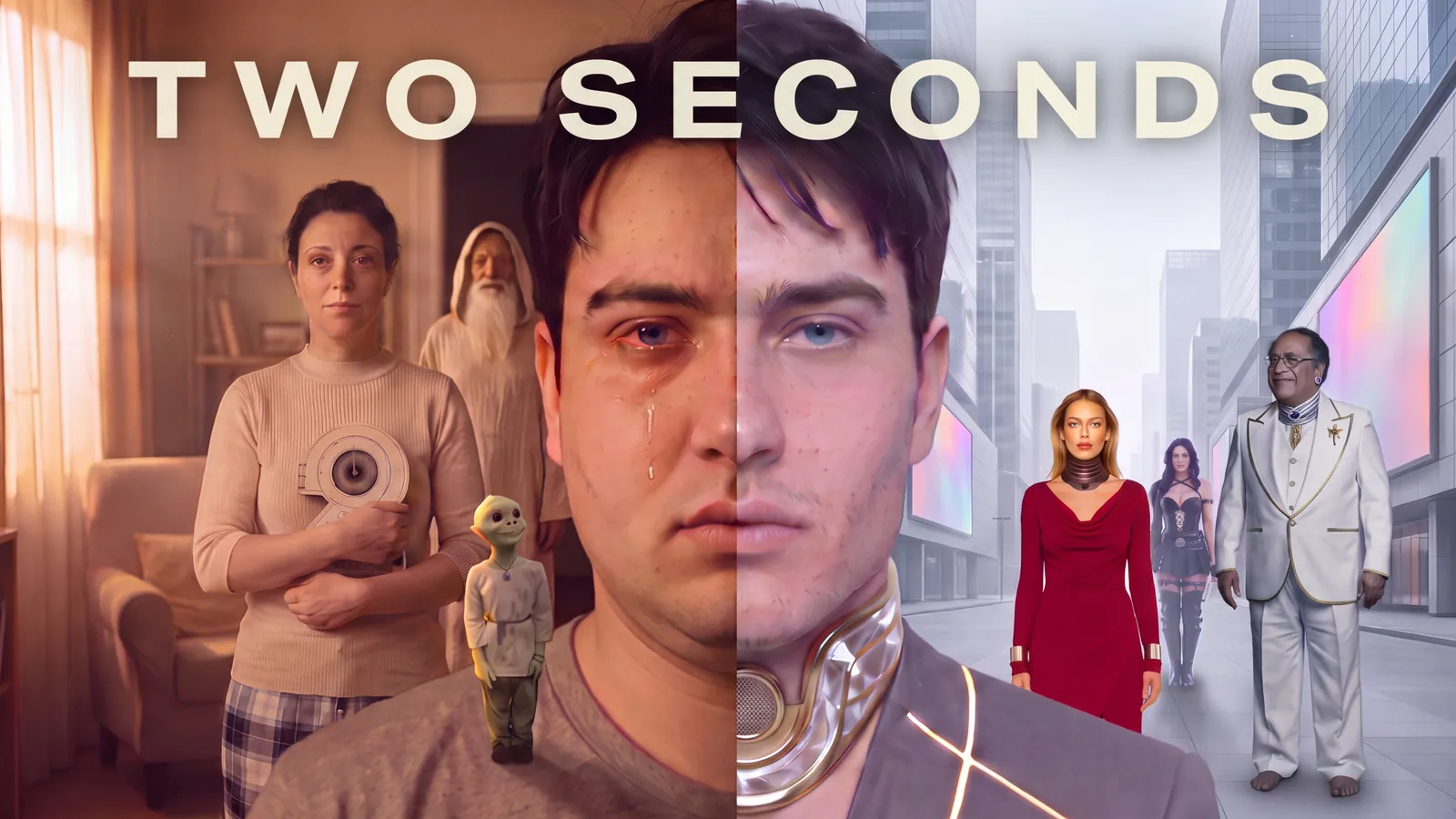
Two seconds is not a long time. It is only slightly longer than we are willing to give each other.
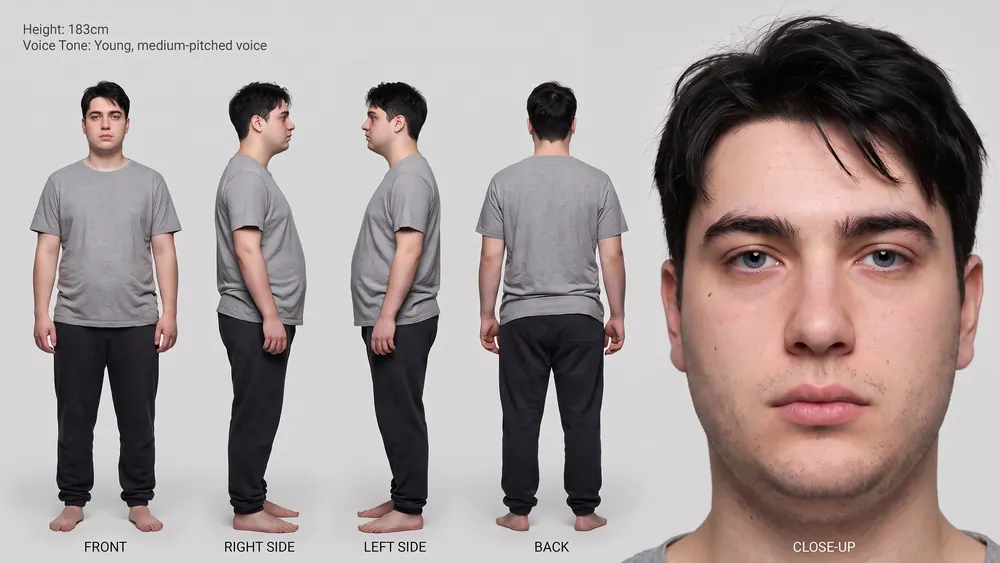
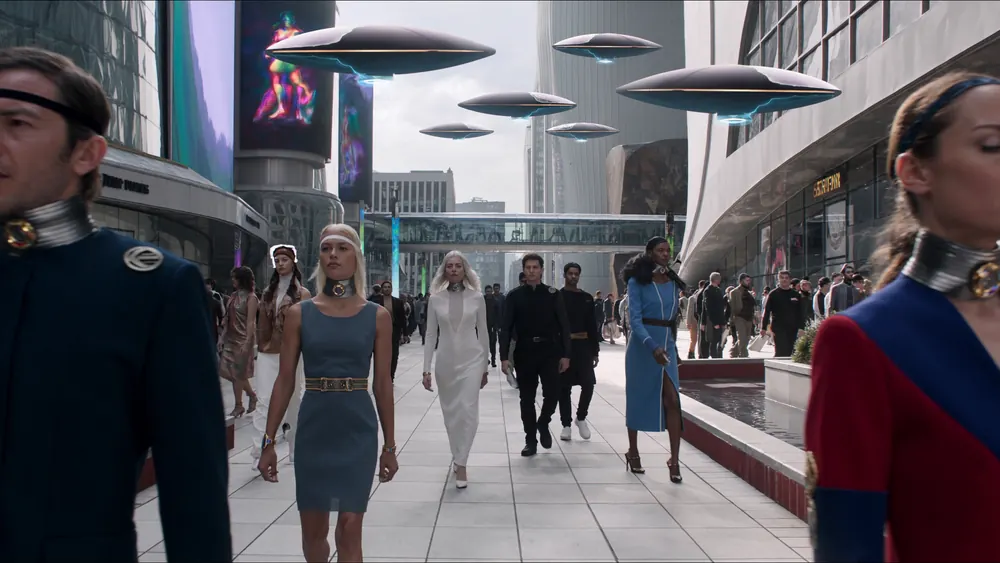
In 2129, nobody looks at anyone. People send Robautos out into the world — flawless proxy bodies — while the real body stays home. Bio is thirty, heavy, tired, and born with a useless gift: if two people hold each other’s gaze for two full seconds, he sees himself as they see him. It has never worked, because two seconds is longer than anyone can spare.
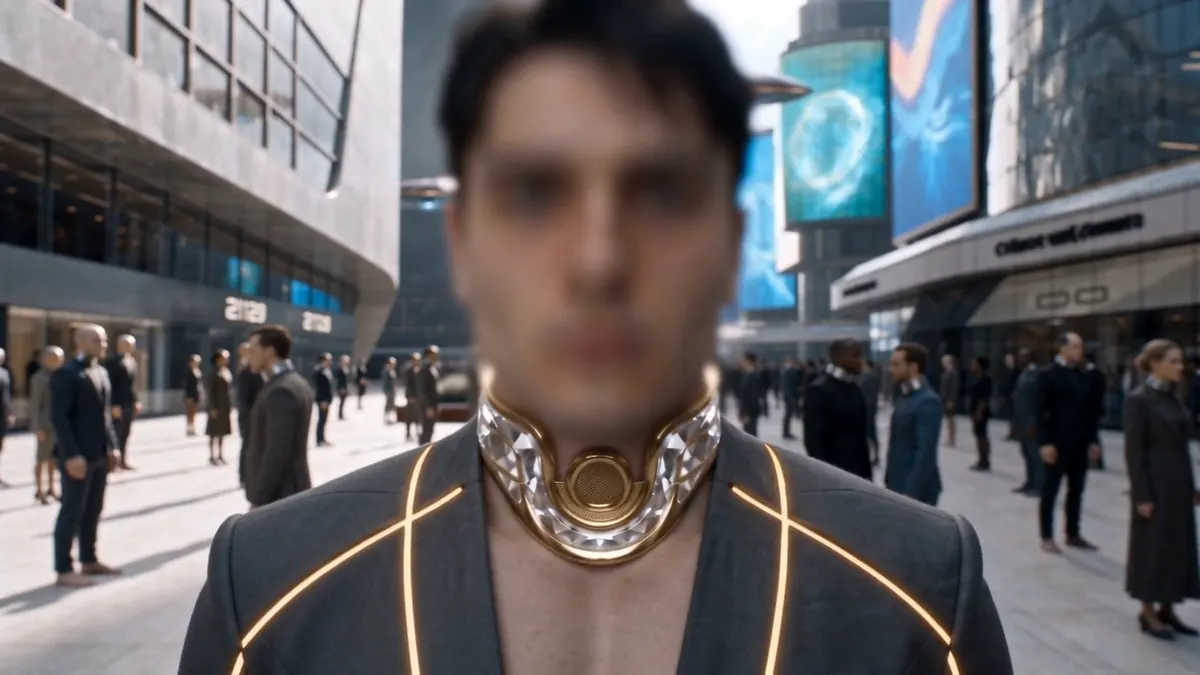
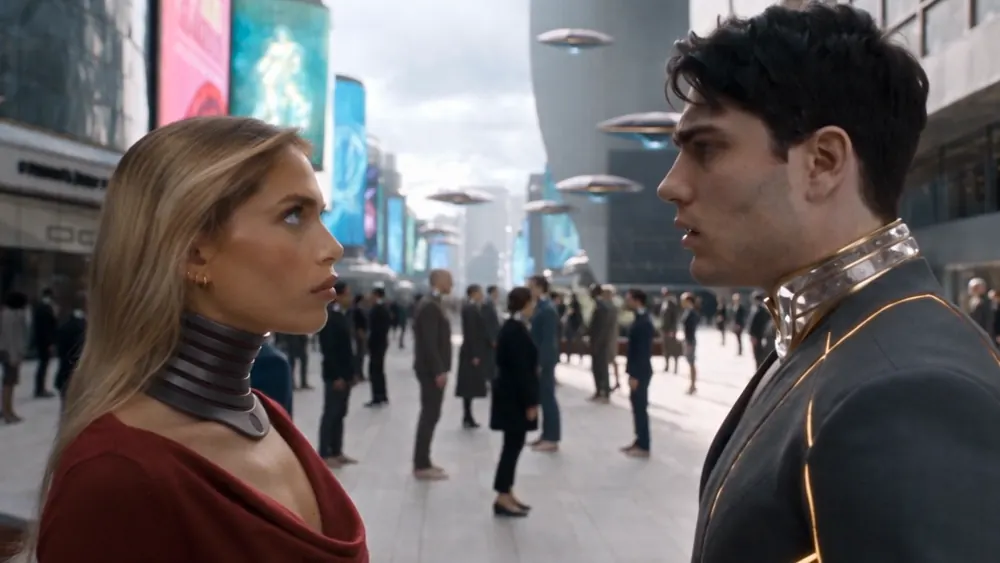
Then a book pulls him into that world, on the one day of the year the system forces everyone into eye contact. He looks at the woman he loves and finds no face — only a sharp watch and expensive plating. He looks at a stranger and is not in frame at all. He looks at his employer and finds a grey placeholder holding centred, lit work.
Nobody finds him ugly. Nobody sees him.
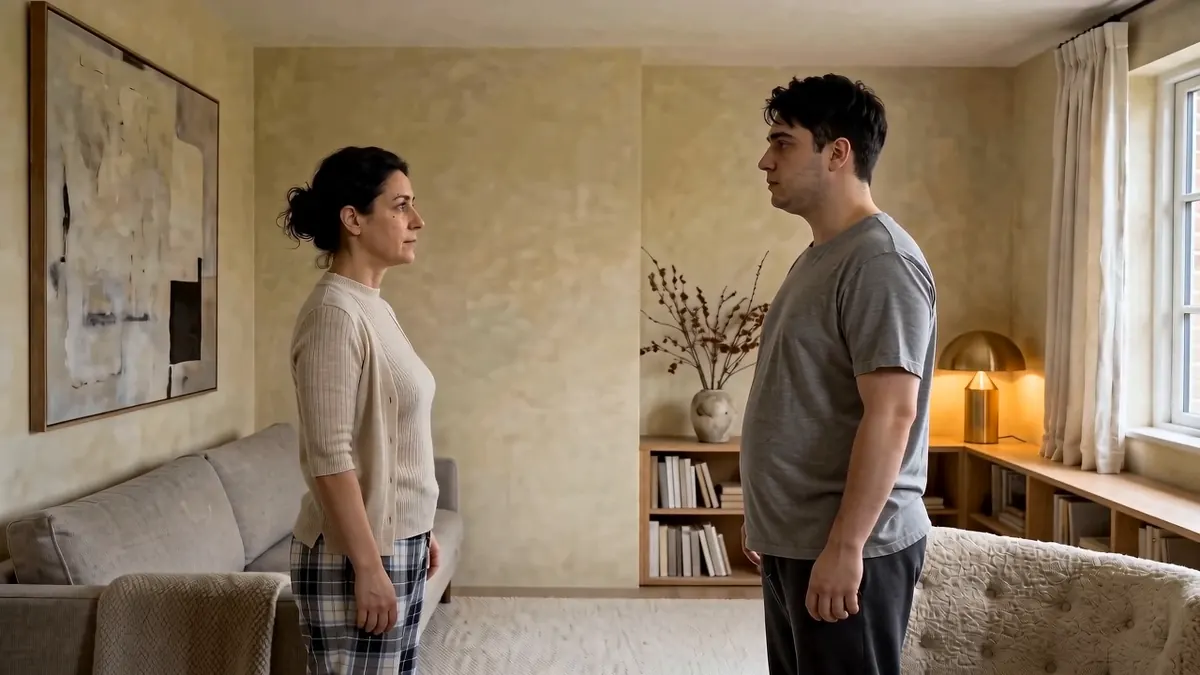
Then his mother stops in a doorway, and looks.
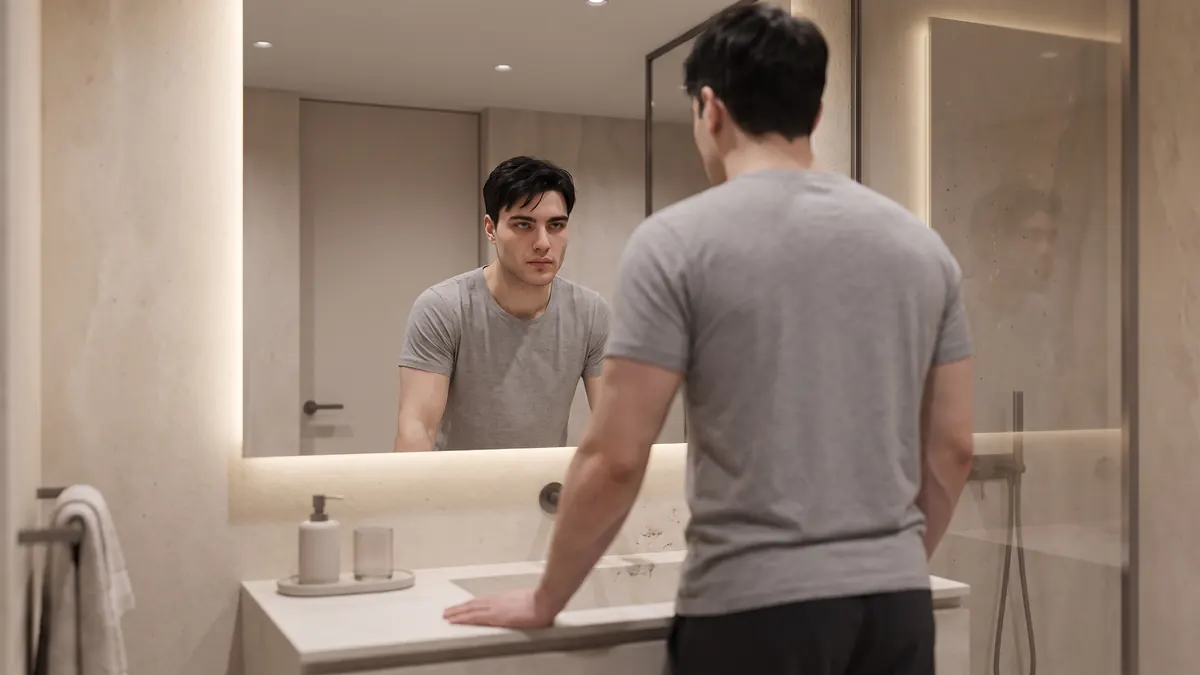
THE MIRROR · LIEThe man in the mirror is muscular. Too smooth, too symmetrical — a render. Muscular exists in exactly two places in this film: the mirror and the adventure. Both of them are inside Bio’s own head.NISS · BLURWhen Niss looks at him there is no face — blurred, absorbed into the background. But the watch, the jacket and the plating stay razor sharp. That is what she was looking at.HIS MOTHER · SEEThe real man. Nothing added, nothing removed. The film’s first and only completely still image — and at 8:43 the hum running under the whole film cuts out.
Bio’s body is identical in every frame of the film. What changes is how sharp he is, and where in the frame he is permitted to stand.
A FILM IN 10 DAYS
Written, directed, designed, cut, scored and sound-designed by one person. No crew; the budget is the bill for the tools.
10days
11scenes
10:27runtime
1person
$150budget
3000+assets
The film cost $150 in total — all of it credits, none of it crew or equipment. That limit meant two or three attempts per shot at most, so there are shots in the film that are not where I wanted them. You will spot rough edges here and there, and the honest thing is to say so.
When a shot failed twice I did not force a third take; I went back to the hero frame and fixed it there: generating a still costs a fraction of turning that still into video. The credits were reserved for the shots that carry the film — the mother’s gaze, Niss’s point of view, the alien’s wait. The adventure sequence is short clips and fast cutting, and took the smallest share of the budget.
Even so, making a film in ten days was enormous fun. A character sheet in the morning, a location in the afternoon, three shots set there at night — and the next day all of it becomes a scene. That one person can do this without a crew still feels strange.
THE PIPELINE
Four stages, in this order, every time. The finished 10:27 film came out of more than 3,000 generated assets.
01
CAST
Every recurring character is built once, as a permanent asset: front, three-quarter, profile and back views, flat even light, neutral ground, full costume. Identity is anchored to describable physical facts — bone structure, hairline, posture — and never to any real person.
02
LOCATION
Environments are built as readable plates rather than hero compositions: geography, materials, and the light sources that have to exist in every shot set there. Day and night variants are generated wherever the story crosses between them.
03
HERO FRAME
One still per shot, before any video exists. Exact framing, exact positions, exact gaze lines, exact prop states. This still becomes the first frame of the video. It is the cheapest place to fix a shot — and where most of the work actually happened.
04
SHOT
Image-to-video from the approved hero frame — never text-to-video. Tempo locked, so the model is not permitted to cut inside a clip. Every cut in the finished film is a human cut, made afterwards, on a timeline.
Every prompt, every character and location asset and all the generated media are open on the film’s Higgsfield project page — you can go through all of it there.Browse on Higgsfield ↗
WHAT IT WAS MADE WITH
The same credits that roll at the end of the film.
DIRECTED & STORY BY
Bilal Gürkan Şanlı
VIDEO MODELS
Seedance 2.0 / 2.5 Higgsfield Cinema Studio 4.0
IMAGE MODELS
Nano Banana Pro Higgsfield Soul Cinema
SOUND EFFECTS
ElevenLabs
MUSIC MODEL
Lyria 3.5
PROMPTS
Opus 5.0
VIDEO EDITS
DaVinci Resolve no AI in this stage
Created entirely with artificial intelligence. All characters and events are fictional; any resemblance to real persons is coincidental. No real person’s face, likeness or voice was used as input at any stage — including the director’s own.